

Most shooters don’t think about rifle balance until the day it starts annoying them.
For a long time, I assumed accuracy was mostly about the barrel and the optic. If a rifle grouped well from the bench, I figured everything else was fine. Then one afternoon at the range I tried practicing from kneeling and realized something strange — the rifle that shot great on bags suddenly felt awkward the moment I had to hold it myself.
The muzzle kept drifting forward. Not dramatically, just enough that I had to keep correcting it. After a few minutes it became obvious that the rifle wasn’t really working with me. The weight was sitting farther forward than I realized, and the moment I moved away from a supported position, it showed.
That’s when rifle balance finally started making sense.
You hear shooters talk about rifles that “settle.” That’s a good way to describe it. Some rifles seem to fall into position and stay there without much effort. Others constantly need small corrections. The difference is usually where the weight sits along the rifle.
The stock plays a bigger role in that than people expect. It’s the part that connects everything — your shoulder, the action, the barrel — so its shape and weight can shift the whole feel of the rifle. That’s why shooters experimenting with handling often start looking at different setups like purpose-built hunting stocks. A quick look at something like WOOX’s hunting stock collection shows how much variation there actually is in designs meant for real field use:
https://wooxstore.com/collections/hunting-stocks-and-chassis
Once you start paying attention to balance, you notice it everywhere.
Pick up two rifles that weigh roughly the same and they can still feel completely different. One might feel planted and steady, while the other feels like it wants to tip forward. Neither is necessarily wrong — they’re just built with different priorities.
Some shooters actually prefer a little extra weight toward the front. It slows the rifle down slightly and can make it feel steadier when you’re trying to hold the reticle on a distant target. Others like a rifle that balances closer to the action so it feels lighter and easier to move around.
It really depends on what the rifle is meant to do.
A hunter hiking all day through uneven terrain might care a lot more about how the rifle carries than how it behaves during a long hold on target. A shooter working on longer-range precision might happily accept extra weight if it helps keep the reticle calmer.
This is where rifle setup starts turning into a bit of a rabbit hole. Once you notice how balance affects your shooting, it’s hard to ignore. Shooters start experimenting — different optics, bipods, barrel profiles, or stock designs — trying to find the combination that feels right.
Stocks designed for precision setups tend to focus heavily on stability and ergonomics. The goal isn’t just accuracy on paper but making the rifle easier to control in awkward positions. That’s the thinking behind many precision-oriented stock systems like the ones here:
https://wooxstore.com/collections/chassis-precision-stock
The funny part is how small changes can throw everything off.
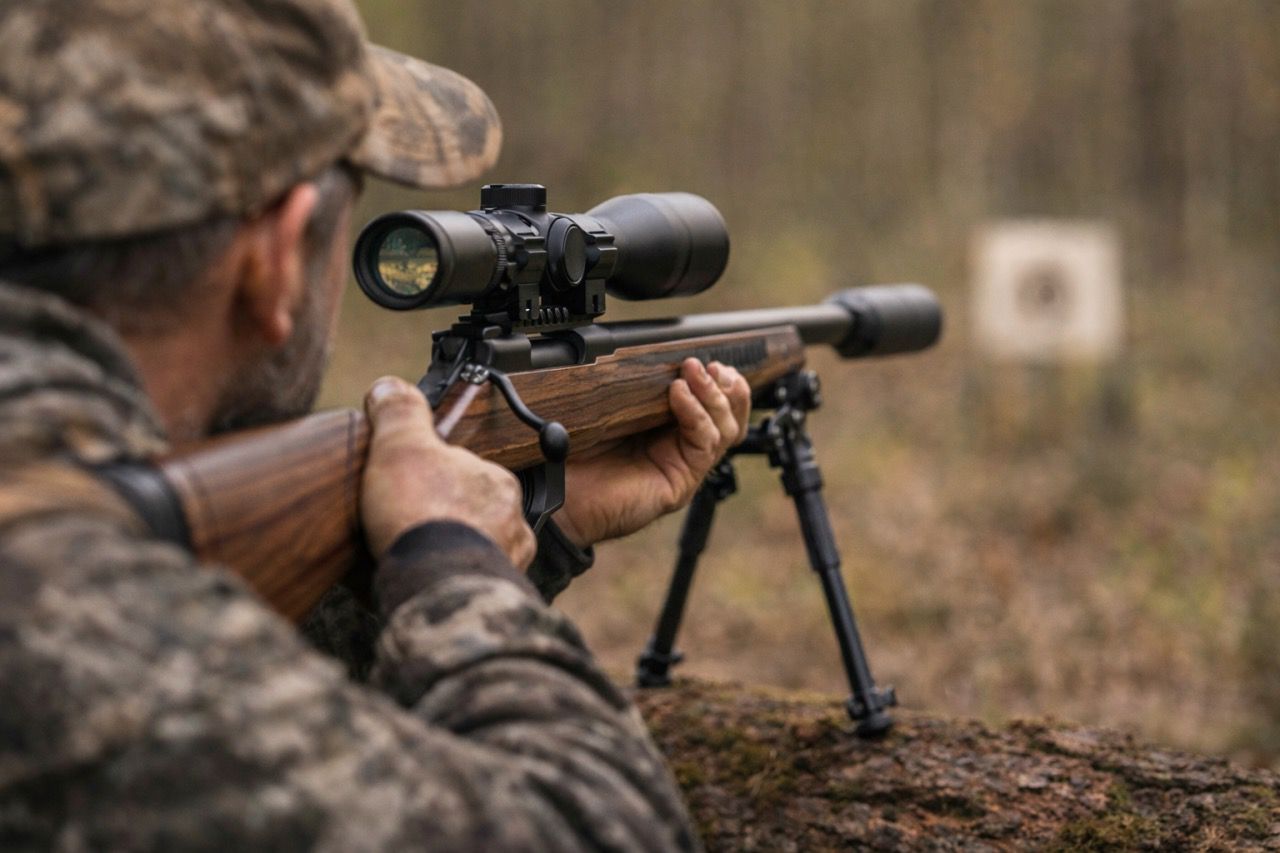
Add a suppressor and suddenly the rifle feels front heavy. Mount a larger optic and the center of gravity shifts again. Even a bipod can change the way the rifle settles when you’re aiming.
That’s why experienced shooters rarely think of rifle setup as something finished. It evolves over time. You learn what works for you and slowly tweak things until the rifle behaves the way you want.
Some shooters eventually go further and start building their setup around a specific stock design that matches their rifle and shooting style. Being able to configure something like that is why tools that let you build a custom rifle stock have become popular — it gives shooters a chance to tune the balance instead of adapting themselves to the rifle:
https://wooxstore.com/products/build-your-stock
If there’s one thing you notice after spending enough time shooting, it’s that balance becomes far more obvious outside the shooting bench.
At a range, sandbags hide a lot of problems. Out in the field, they show up quickly. You might be leaning against a tree, resting the rifle on a pack, or trying to hold steady from kneeling on uneven ground. When the rifle balances well, it almost feels cooperative. When it doesn’t, every shot takes a little more effort than it should.
There isn’t a universal balance point that works for everyone. Some shooters like lighter rifles. Others prefer something a bit heavier and steadier.
What matters most is how the rifle feels when you bring it up to shoot.
When the balance is right, you stop thinking about the rifle entirely. You just focus on the shot.