

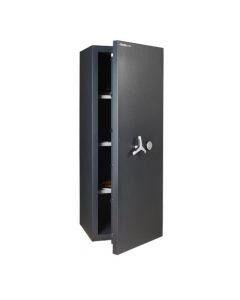
Imagine losing your passport, property deeds, insurance policies, and irreplaceable family photos — not to a burglar, but to a house fire. It happens more often than most people realise. That’s exactly why fire-rated home safes exist. But the big question many homeowners ask is: do they actually work?
Let’s cut through the marketing and give you a straight, honest answer.
What Is a Fire-Rated Home Safe?
A fire-rated home safe is a specially constructed security box designed to protect its contents from heat and smoke damage during a fire. Unlike standard safes built purely for theft protection, fire-rated models include insulating materials between their walls that absorb heat and maintain a lower internal temperature — even when flames surround them.
The key word here is rated. Every legitimate fire-rated safe has been independently tested and certified to withstand fire for a specific period at a specific temperature.
How Are Fire Ratings Measured?
Fire ratings are based on two key factors:
- Temperature resistance — how hot the external fire can get
- Duration — how long the safe maintains a safe internal temperature
The most common ratings you’ll see are:
| Rating | External Temp | Protection Duration |
|---|---|---|
| 30 minutes | Up to 1,000°C | 30 mins |
| 60 minutes | Up to 1,000°C | 60 mins |
| 120 minutes | Up to 1,100°C | 120 mins |
For context, the average house fire burns at around 600°C to 900°C and firefighters typically respond within 8 to 14 minutes. A 60-minute rated safe covers most real-world scenarios comfortably.
What Documents Can a Fire-Rated Safe Protect?
Different materials have different heat tolerances, and this matters when choosing your safe.
Paper documents begin to char at around 177°C and ignite at 233°C. A fire-rated safe certified for paper protection keeps internal temperatures below 177°C during the rated period.
Documents and items well-suited for fire-rated safe storage include:
- Birth certificates and passports
- Property titles and mortgage documents
- Insurance policies and financial records
- Wills and legal documents
- USB drives and external hard drives
- Family photographs and negatives
- Cash and banknotes
What About Digital Media?
This is where many homeowners get caught off guard. USB drives, SD cards, and hard drives are far more heat-sensitive than paper. Digital media can be damaged at temperatures as low as 52°C — well below what standard paper-rated safes allow internally.
If you’re storing digital media, look specifically for a safe with a media or data rating, which maintains internal temperatures below 52°C. These safes typically carry an “UL Class 125” or similar certification.
Do Fire-Rated Safes Also Protect Against Water Damage?
Not automatically. During firefighting efforts, your safe will likely be soaked with water. Some fire-rated safes include waterproof seals that prevent water from entering during and after a fire — but not all do.
If water damage is a concern — and it should be — look for a safe that carries both a fire rating and a waterproof certification. This dual protection gives your documents the best possible chance of survival.
Common Myths About Fire-Rated Safes
Myth 1: Any safe labelled “fireproof” is fully protected No safe is truly fireproof. The correct term is fire-resistant. Always check the specific temperature and duration ratings rather than relying on marketing language.
Myth 2: A heavier safe means better fire protection Weight often relates to steel thickness for burglary resistance — not fire insulation. A lightweight safe can have excellent fire ratings if it contains quality insulating material.
Myth 3: Fire-rated safes don’t need to be bolted down Wrong. An unbolted safe can be carried out of your home by a burglar or topple during a fire, compromising its seal. Always bolt your safe to the floor or wall.
Choosing the Right Fire-Rated Safe
When shopping for a fire-rated safe, keep these key points in mind:
- Check the certification — look for independently tested ratings, not just manufacturer claims
- Match the rating to your risk — 60 minutes is sufficient for most homes
- Consider what you’re storing — paper vs. digital media requires different temperature ratings
- Look for combined protection — fire plus waterproofing is always the smarter choice
- Buy from a reputable supplier — quality matters enormously with safes
Trusted suppliers like Safes Australia offer a wide range of certified fire-rated safes suited to different home security needs and budgets, making it easier to find the right protection without overspending.
The Bottom Line
Fire-rated home safes absolutely do work — when you choose the right one and use it correctly. They are one of the most practical investments a homeowner can make to protect irreplaceable documents and valuables from one of the most common household disasters.
Don’t wait until it’s too late. The documents inside your safe could take a lifetime to replace — but a quality fire-rated safe costs far less than the stress of losing them forever.