

Table of Contents
- Enhancing Structural Integrity
- Elevating Aesthetic Appeal
- Promoting Sustainability
- Facilitating Design Flexibility
- Embracing Technological Advancements
- Ensuring Fire Resistance
- Balancing Cost-Effectiveness
- Final Thoughts
In the ever-evolving world of modern construction, stainless steel has quickly established itself as an indispensable material. Its combination of strength, resilience, and visual appeal has led to its widespread use in everything from skyscraper frameworks to detailed interior finishes. As a result, architects and builders increasingly turn to stainless steel for its numerous advantages. For more information about specialty steel and its applications, visit https://www.specialtysteel.com/.
Thanks to its unique properties, stainless steel has become the backbone of progressive architecture and structural engineering. It withstands harsh weather, adapts easily to innovative designs, and offers an unparalleled blend of durability and modern style. As sustainability and technological advancements drive the construction industry forward, stainless steel stands at the center of this transformation, shaping skylines and defining spaces globally.
Enhancing Structural Integrity
Stainless steel excels in providing robust structural integrity, largely due to its high strength-to-weight ratio. In practical terms, this allows buildings to have lighter frameworks without compromising safety or support. Steel beams and columns made of stainless steel resist bending, warping, or sagging under substantial loads, making them ideal for both high-rise construction and long-span bridges. Its excellent resistance to rust and chemical exposure ensures long-lasting performance, even in the harshest environments, from coastal areas to industrial cities.
Elevating Aesthetic Appeal
Beyond its structural uses, stainless steel is beloved by architects for its sleek, timeless appearance. Whether used in glossy facades or brushed interior panels, it provides a clean, modern look that complements contemporary design sensibilities. Its reflective surfaces can brighten interiors, lend a sense of openness, and showcase bold architectural statements. The growing popularity of sanded or matte finishes adds warmth and texture, making them perfect for high-end kitchens or unique feature walls.
Promoting Sustainability
Today’s construction industry places a premium on environmentally responsible building materials. Stainless steel meets this demand through its high recyclability. In many manufacturing processes, stainless steel is produced with a high percentage of recycled content, significantly reducing the material’s environmental footprint. Its long lifespan reduces the frequency of replacements and renovations, conserving raw materials and energy over time. These factors not only benefit the environment but also align with the growing trend of green architecture.
Facilitating Design Flexibility
Stainless steel’s properties allow architects to imagine structures that push beyond conventional boundaries. Its malleability and strength mean it can be molded, bent, or cut into a variety of forms and scales, accommodating both functional and decorative needs. From undulating facades to organic staircase designs, stainless steel brings visionary concepts to life. Parametric architecture, which relies on computational design to achieve highly intricate shapes, often relies on stainless steel.
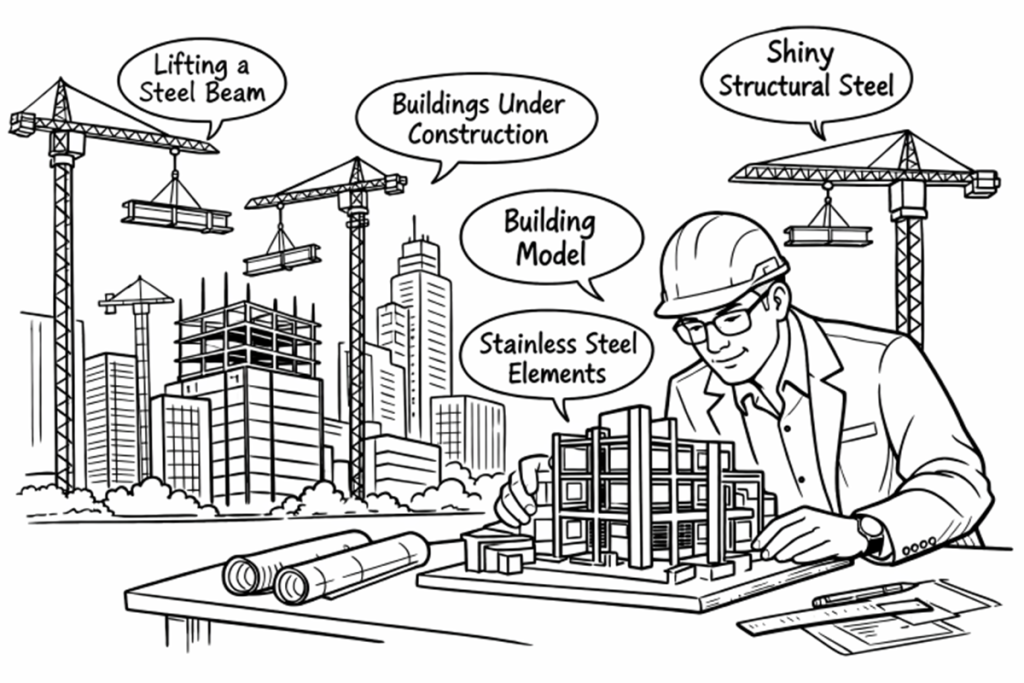
Incorporating stainless steel in innovative ways also inspires collaboration between architects, engineers, and fabricators, bridging the gap between creative vision and practical execution. This material’s flexibility supports the evolution of architectural forms while ensuring structural reliability.
Embracing Technological Advancements
Rapid advancements in fabrication technology have broadened the horizons for stainless steel in construction. Precision manufacturing techniques, such as computer-controlled cutting and welding, enable the efficient production of custom components for any architectural requirement. The advent of 3D printing has further opened the door to complex geometries and design details that would have been difficult or impossible with traditional methods. These innovations are fueling a new wave of creative applications for stainless steel, from intricate lattice structures to modular building systems.
Ensuring Fire Resistance
Safety is a top priority in any construction project, and stainless steel excels in fire resistance. As a non-combustible material, stainless steel helps slow the spread of flames, providing critical time for occupants to evacuate during emergencies. Although it can lose some strength at extremely high temperatures, proper engineering, including the use of fire-rated assemblies and insulation, can mitigate this risk. Compared with other building materials, stainless steel offers reliable protection and peace of mind for both designers and building owners.
Balancing Cost-Effectiveness
While stainless steel may cost more upfront than some alternatives, its overall cost benefits become clear when considering a building’s life cycle. Its durability and corrosion resistance eliminate frequent repairs and reduce maintenance requirements, resulting in significant savings over the long term. This makes it a wise investment, particularly for structures intended to stand the test of time. Additionally, using stainless steel may add value through enhanced aesthetics and sustainability, making properties more attractive to tenants and buyers.
Final Thoughts
The influence of stainless steel in modern construction is evident worldwide. Its unique combination of strength, flexibility, sustainability, and visual allure ensures it remains a foundational material in shaping the future built environment. As building technology and design philosophies evolve, stainless steel will continue to drive innovation, safety, and enduring architectural beauty.